
GLP-1 Side Effects Tracker
Rate how you feel, symptom by symptom, and see it lined up against your shots, meals and dose changes.


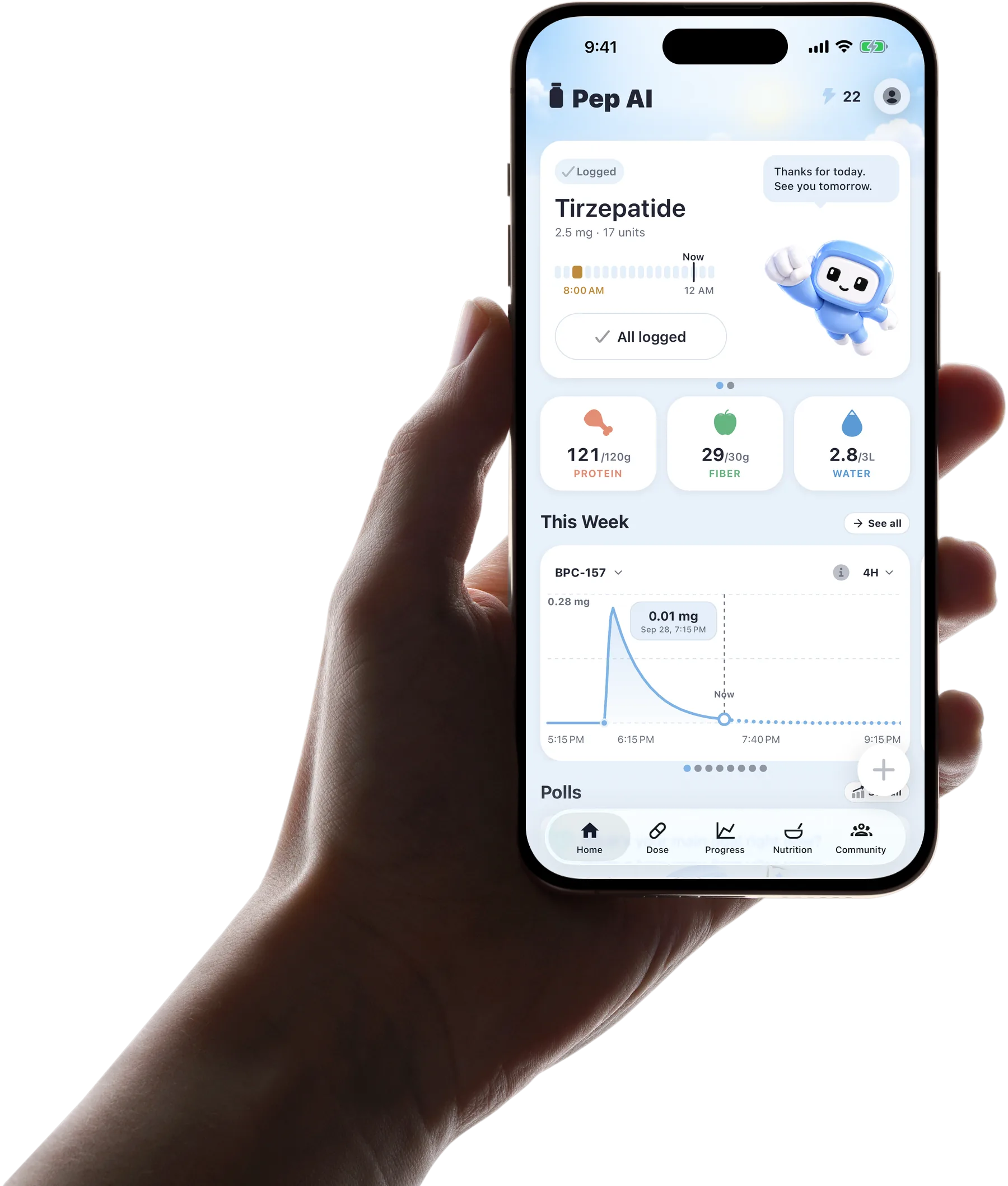
Published by Pep AI · GLP-1 side effects tracker · Updated September 2026
Side effects on a GLP-1 are usually worst in the first weeks and after a dose increase, and for most people they ease with time. The trouble is that memory is a poor record. By the time you see your prescriber, eight weeks of nausea, constipation and tired afternoons have blurred into "it was rough for a while," which is not much to make a decision with.
Pep AI gives you a quick way to write it down while it is happening. Pick from symptoms grouped the way they tend to show up: injection site (pain, redness, swelling, itch), digestive (nausea, bloating, constipation, diarrhea, sulfur burps, appetite changes), head and nerves (headache, dizziness, brain fog, trouble sleeping), mood and energy (anxiety, mood changes, fatigue) and body (muscle soreness, joint pain, hair thinning). Each one gets its own severity rating.
Because symptoms share a timeline with your doses and food, the patterns become visible. Nausea that peaks two days after the shot, constipation that tracks low water, a headache that only shows up on skipped-breakfast days: these are things you can see in a log and bring to an appointment, rather than guess at.
Some symptoms need prompt medical attention rather than a log entry, including severe or persistent stomach pain, vomiting you cannot keep fluids down through, or signs of an allergic reaction. The GLP-1 side effects guide on this site covers the warning signs from the prescribing information.
A symptom log you will actually keep
Fast enough to use on a bad day, detailed enough to be useful at your next appointment.
Grouped symptoms
Injection site, digestive, head and nerves, mood and energy, and body, including GLP-1 specific ones like sulfur burps.
Severity per symptom
Rate each symptom on its own, so mild bloating and a bad headache on the same day do not collapse into one score.
Lined up with doses
Every entry sits on the same timeline as your shots, so you can see how symptoms move across the week and after a dose change.
Food and water context
Meals, protein, fiber and water are logged in the same app, which is often where the explanation for a symptom turns up.
Injection sites
Log where each shot went and rotate, so a sore or itchy site can be traced back to a specific injection.
Estimated levels
An estimated medication-level curve modelled from your doses and published half-lives, useful for spotting where in the week symptoms cluster.
Frequently asked questions
Why track GLP-1 side effects?+
Because recall is unreliable over weeks, and the timing of a symptom relative to your dose is often the most useful thing your prescriber can know. A dated log with severity ratings turns "it was bad for a while" into a pattern you can actually discuss.
Which side effects can I log?+
Injection-site pain, redness, swelling and itch; nausea, bloating, constipation, diarrhea, sulfur burps and appetite changes; headache, dizziness, brain fog and trouble sleeping; anxiety, mood changes and fatigue; and muscle soreness, joint pain and hair thinning. Each has its own severity rating.
Can Pep AI tell me if a symptom is serious?+
No. Pep AI records symptoms; it does not diagnose them. Severe or persistent abdominal pain, persistent vomiting, signs of dehydration or of an allergic reaction need prompt medical attention. Contact your healthcare provider, or call 911 in an emergency.
Does it work for Ozempic, Wegovy, Mounjaro and Zepbound?+
Yes. The symptom tracker works with any GLP-1 or peptide you log, including semaglutide and tirzepatide brands, whether you use a pen or a vial.
Should I change my dose if side effects are bad?+
That decision belongs to your prescriber. Bring your log to the conversation; it is exactly the information they need to decide whether to hold, slow or adjust your plan.
Does Pep AI give medical advice?+
No. Pep AI is a tracking and education app, not a medical device. It records what you log and shows patterns; it does not diagnose, set medical targets or change your treatment. Decisions about your medication stay with your prescriber.
Start tracking smarter today.
Download Pep AI free on iOS and Android.