
Protein Tracker App
Set a daily protein goal, log it meal by meal, and see early in the day whether you are going to make it.


Published by Pep AI · Protein tracker · Updated September 2026
Protein is the nutrient people most often miss when they eat less, and it is the one with the clearest consequence. During weight loss, too little protein raises the share of lost weight that comes from lean tissue rather than fat. On a GLP-1 the shortfall is easy to fall into, because protein-rich food is also the most filling, and fullness arrives after a few bites.
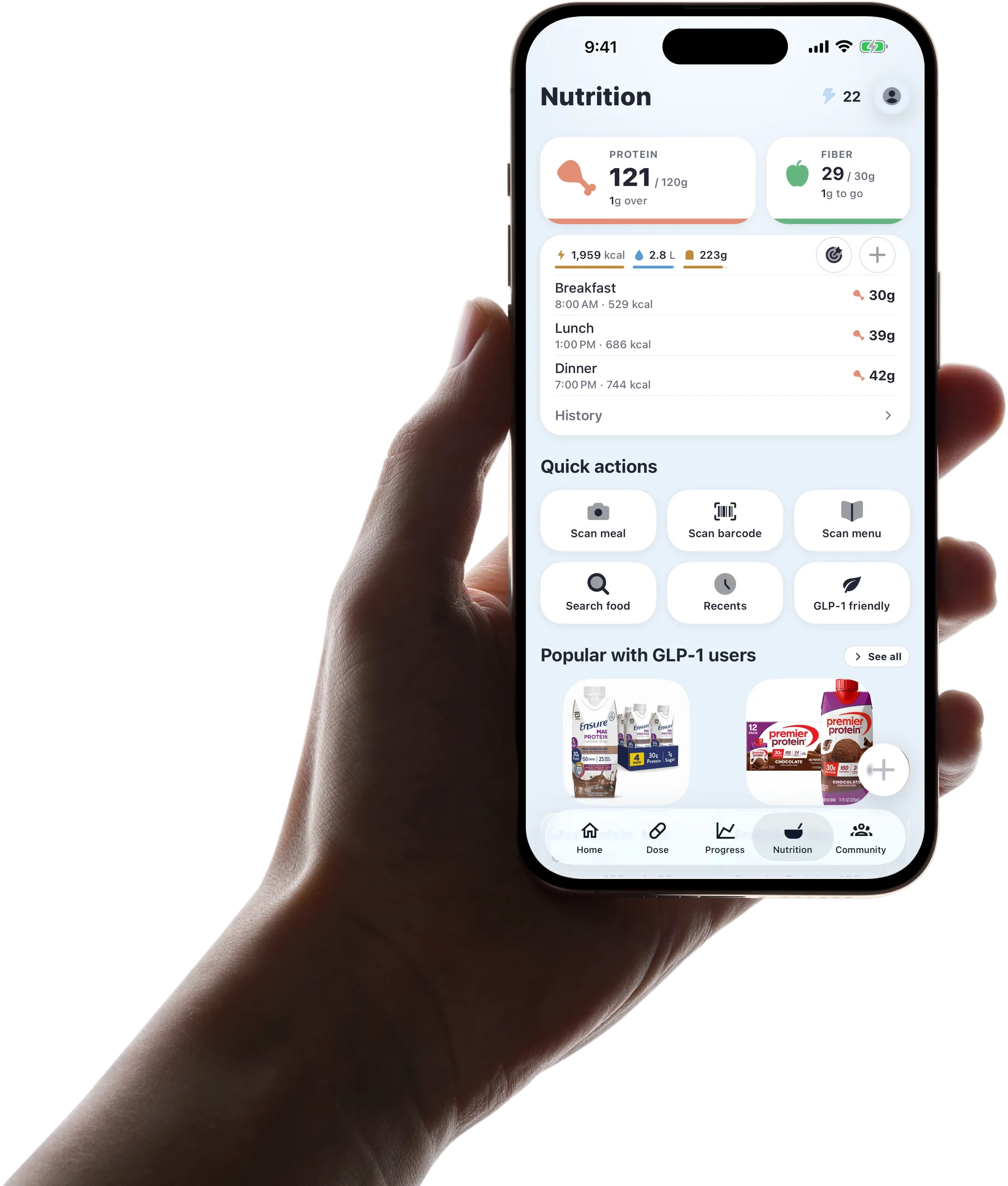
Pep AI treats protein as the headline number rather than a line under calories. Set your goal, then log food by photo, barcode, menu scan or search, or quick-add the grams from a shake. The day's progress shows as a ring you can read at a glance, so by lunch you know whether dinner has to do more of the work.
The per-meal view is where tracking earns its keep. A daily total is hard to picture; knowing that breakfast carried a third of it and lunch carried almost none tells you exactly what to change tomorrow. Pair that with workout logging in the same app and you have both halves of keeping muscle: enough protein and a reason for the body to use it.
Not sure what goal to set? The free protein calculator on this site gives a range from your weight and training. If you have kidney disease or another condition, your clinician's target replaces any general figure.
Protein as the number that leads the day
Most food apps bury protein under calories. When eating less is the easy part, protein is the part worth watching.
A goal you set
Enter your own daily protein goal alongside calories, carbs, fat and fiber. Change it any time your plan changes.
Fast logging
Photo, barcode, restaurant menu, database search or recents. Quick log takes the grams straight from a shake label.
Progress ring
Grams logged against your goal, visible on the Lifestyle screen, so a shortfall is obvious before the day is over.
Higher-protein ideas
A GLP-1 friendly list of shakes, bars, powders, snacks and restaurant picks when you need protein in a small volume.
Workout logging
Log resistance sessions in the same app. Protein supplies the material; training is the signal to keep muscle.
Weight in context
Weight, progress photos and your dose history sit beside protein, so you can see how the pieces move together.
Frequently asked questions
How much protein should I eat per day?+
It scales with body weight and rises when you are losing weight or training. The protein calculator on this site gives a range in grams from your weight and activity. Reduced kidney function changes the answer entirely, so anyone in that situation should use the target their clinician sets.
Why track protein instead of calories on a GLP-1?+
Because the medication already lowers calorie intake for most people, while protein is the nutrient most likely to fall short. Low protein during weight loss increases the share of lost weight that comes from muscle and other lean tissue.
Can I log protein shakes quickly?+
Yes. Scan the barcode, search for the product, or use quick log to enter the grams directly from the label.
Does Pep AI track other nutrients?+
Yes. Calories, carbs, fat and fiber have goals too, and water is tracked with optional reminders. Protein is simply the one shown first.
Is Pep AI only for people on GLP-1s?+
No. Anyone can use it as a protein and food tracker. It is built with GLP-1 and peptide users in mind, so doses, side effects and weight live in the same app if you need them.
Does Pep AI give medical advice?+
No. Pep AI is a tracking and education app, not a medical device. It records what you log and shows patterns; it does not diagnose, set medical targets or change your treatment. Decisions about your medication stay with your prescriber.
Start tracking smarter today.
Download Pep AI free on iOS and Android.