
That bruise is usually not a drug reaction. It's more often a geometry problem, and once you understand the anatomy beneath your skin, preventing it comes down to technique and knowing exactly where you injected last.
Spotting a bruise after your first Ozempic® shot can feel alarming. Many people assume that bruising at the injection site means the medication is causing a problematic reaction that warrants concern or a call to your prescriber. That assumption is understandable, but it points in the wrong direction.
A bruise is often linked to the injection itself rather than the drug, but ask your prescriber if you are unsure. It is usually an anatomy story. Understanding what sits beneath your skin during a subcutaneous injection changes how you think about prevention entirely, and tools like a GLP-1 tracker for shots and progress exist precisely because that prevention depends on remembering where you injected last time.
Ozempic® (semaglutide) is a once-weekly subcutaneous injection approved for adults with type 2 diabetes. A higher-dose semaglutide, Wegovy®, is approved for chronic weight management. "Subcutaneous" means the medication deposits into the fat layer sitting just below the skin and above the muscle. According to the Ozempic® FDA label, the injection can be given in the abdomen, thigh or upper arm.

The subcutaneous fat layer contains small blood vessels called capillaries. These vessels sit within millimeters of the needle's path. Whether the medication itself plays any role in bruising is a question for your prescriber or healthcare provider.
A bruise can form when a small amount of blood pools under the skin after a needle clips a capillary. That is a mechanical event, not a pharmacological one. This distinction matters.
It means technique and a record of your recent injection sites may both matter. Injection-site reactions are listed in the Ozempic® FDA label, and your prescriber can tell you what to expect. Some people who bruise repeatedly inject the same patch of skin week after week, stressing capillaries that have not fully healed. That pattern is easy to miss without a rotation record, even with careful technique.
0.2%
of Ozempic®-treated patients in placebo-controlled trials reported injection site reactions, such as discomfort or redness (Ozempic® FDA label)
Key takeaways
- Ozempic® bruising is often tied to technique and site rotation, so ask your prescriber if you are concerned.
- A subcutaneous needle can clip a capillary by chance; rotating sites on a consistent schedule is a common way to keep track of where you injected last time.
- For how to care for a bruise, such as whether to use cold or warmth, ask your prescriber or healthcare provider.
- Two bruises can look identical, so if one looks unusual, keeps getting worse or comes with other symptoms, contact your prescriber or healthcare provider rather than judging it yourself.
- Many people find it hard to rotate sites consistently because they have no lasting record of where they injected last time. A mental map tends to fade after a few weeks.
- Pep AI's GLP-1 tracker helps close that gap. You log the site on the body map when you log your shot, the app marks your last site and warns you if you pick the same spot as last time, and the dose log keeps your history. For weekly shots such as Ozempic®, Wegovy®, Mounjaro® and Zepbound®, it also shows an estimated medication-level chart between doses.
Why Ozempic® Causes Bruising at the Injection Site
Capillary contact during subcutaneous injection can happen, and when it does under your skin, blood pools into the surrounding tissue and becomes a bruise. Many people assume that bruising at the injection site means the medication is causing a problem. Often, bruising comes from a needle nicking a small vessel. If you are concerned, your prescriber is the right person to ask.
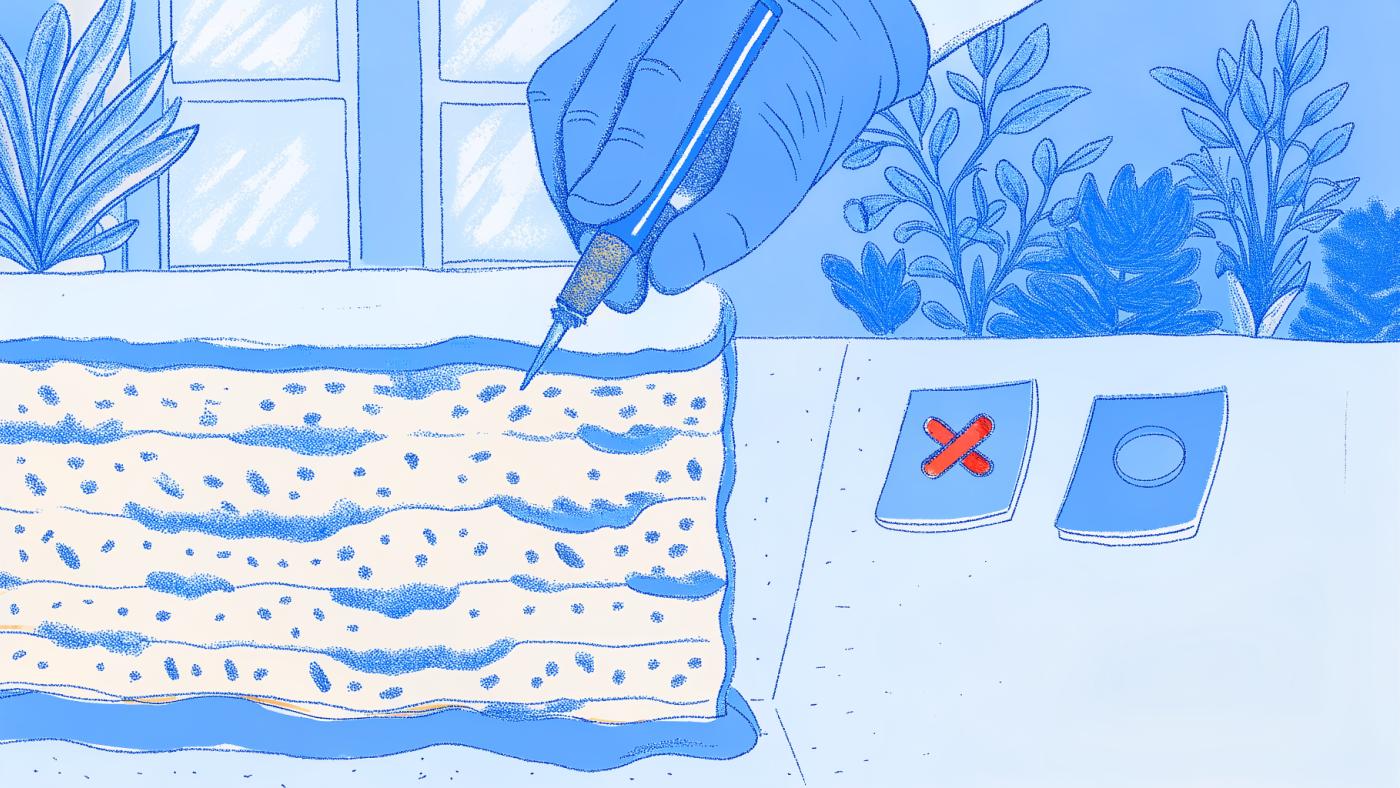
A bruise that seems slow to fade after an injection can be alarming for beginners on GLP-1 medications, and your healthcare provider is the right person to ask about one that worries you.
The Needle Is Often the Cause, Not the Drug
When a needle passes through the fat layer under your skin, it can nick one of those vessels. Blood escapes, spreads under the skin, and turns the familiar purple, then yellow, as it heals. Nursing training material on subcutaneous injections links bruising to tissue disruption from the needle and from massaging the site afterward, which points to technique rather than the drug itself. For how semaglutide works, check the FDA label or ask your prescriber. Blaming the medication can send people down the wrong path, looking for a drug fix to what is often a technique problem.
Two patient-level factors make the same capillary nick produce a bigger, longer bruise. First, blood-thinning medications such as aspirin, warfarin, and apixaban affect the normal clotting response. Second, factors such as thin skin or low body fat may make bruising more likely for some people. Both are worth mentioning to your prescriber, because body changes over time may affect how injections feel and how your skin responds.
Three Technique Errors That Cause Bruising
Speed, angle, and post-injection pressure are the three levers in injection technique. Injecting too quickly may add stress to the surrounding capillaries, so follow the injection instructions in your medication's label. For pressure after withdrawal, follow your label or ask your prescriber. Any one of these errors alone can contribute to bruising, and all three together make it more likely.
The pattern that surfaces repeatedly among people who bruise on every shot is overuse of a single site. This is precisely where site-rotation tracking earns its value: Pep AI lets you log where each injection went so you can see your recent sites at a glance. The Home body map shows your last 4 weeks of sites, with brighter spots for more recent ones.
When Bruising Is Normal and When It Is a Warning Sign
Subcutaneous injections deliver medicine into the fat layer just under the skin, which is rich in small blood and lymph vessels, as a review of subcutaneous drug delivery describes. That is why some bruising at the injection site can happen, and your prescriber can tell you what to expect.
If bruising appears away from the injection site, spreads rapidly, or comes with swelling, warmth, or pain that keeps getting worse, contact your healthcare provider.
How to Prevent Ozempic® Injection Bruising With Better Technique
Treat Every Injection as a Careful Routine, Not a Quick Jab
Start by preparing the pen exactly as your pen's instructions for use describe. The Ozempic® instructions say to wipe the site with an alcohol swab and let it dry before you inject, so give the alcohol time to dry fully before the needle touches skin. Ask your prescriber whether pinching a fold of skin suits you.
Angle and Depth, Follow Your Device's Instructions
Follow the angle in your pen's instructions as your default. Your pen's instructions for use describe the injection technique for your medication, and your prescriber can tell you if a different approach fits your body. Angle and depth can affect how comfortable an injection feels and whether it causes bruising.
Angles can differ between devices. For example, the Ozempic® prefilled syringe instructions use a 45-degree angle into a pinched fold of skin. If you are very lean with minimal abdominal fat, ask your prescriber which technique suits you.
The Six-Second Hold and the No-Rub Rule After Withdrawal
The Ozempic® pen instructions for use say to press and hold the dose button until the dose counter shows 0, then keep pressing and count slowly to 6 before you remove the needle. Follow the instructions that came with your own pen, since they describe how to complete the injection.
After the needle is out, follow the aftercare steps in your pen's instructions for use. The Ozempic® instructions say that if blood appears, press lightly with a gauze pad or cotton ball and do not rub the area. Ask your healthcare provider if you have questions about the site. Pressure and friction produce different outcomes, despite the similarity of the motions.
Site Rotation Is a System, Not a Suggestion
Rotating injection sites is part of the injection instructions in your medication's FDA label, and your prescriber can explain why, including lipohypertrophy, the lumpy tissue that can form when the same spot is used too often. The Novo Nordisk prescribing information specifies three approved areas:
- The abdomen (at least 2 inches from the belly button)
- The thighs
- The back of the upper arms
Ask your prescriber about avoiding scar tissue, moles, and any site that is still bruised or tender from a previous injection.
One simple rotation pattern looks like this: left abdomen one week, right abdomen the next, then left thigh, right thigh, left upper arm, right upper arm, then restart.
Keeping track of that sequence from memory alone is hard across weeks. A GLP-1 tracker with an interactive body-map log helps: tap the site on the body map when you log your shot, and the app marks your last site, lists your recent sites, and warns you if you pick the same spot as last time.
Quick-Reference Injection Ritual Checklist
- Prepare the pen: Follow your medication's FDA label for storage steps
- Check your log: See which sites you used recently and pick a different spot
- Clean the site: Apply alcohol swab; wait until fully dry before injecting
- Pinch the skin if advised: Only if your healthcare provider has shown you to
- Insert the needle: As your healthcare provider has shown you (ask your prescriber about angle if you are very lean)
- Press the dose button: Steady, even pressure, no fast push
- Hold and count: Keep the button pressed until the counter shows 0, then count slowly to 6 (per the Ozempic® instructions for use)
- If blood appears: Press lightly with a gauze pad or cotton ball, and do not rub (per the Ozempic® instructions for use)
- Log the site immediately: Record location and date in your injection tracker
How to Care for Existing Ozempic® Injection Bruises
Many people's instinct when they spot a bruise is to reach for warmth, but timing matters, so ask your prescriber or pharmacist before you try cold or heat.

Hours 0-24 - Why Cold Is Often Discussed First
General bruise education often splits care into two windows. A cold compress is commonly discussed for the first day, because cold narrows blood vessels. Warmth is commonly discussed later, because it increases blood flow. Ask your prescriber or pharmacist whether either is right for you.
One thing that catches many GLP-1 beginners off guard: a bruise can appear instantly the moment the needle is withdrawn, or show up two to three days later with no warning. You feel fine after the shot, then wake up days later to a spreading discoloration and wonder whether something went wrong during the injection.
Hours 24-48 and Beyond - Why Warmth Is Often Discussed Later
Heat widens blood vessels, which is why it is usually not discussed for a fresh bruise. Ask your prescriber about timing before you use warmth.
Days 3-14 - What a Normal Bruise Looks Like as It Heals
As a bruise heals, it often fades from purple to green or yellow. Whether rubbing or pressing on a healing bruise is okay is a question for your prescriber or healthcare provider.
Bruises at injection sites often fade on their own. Ask your prescriber or healthcare provider about any that linger or worry you. Bruising can also follow when the same small cluster of sites gets used again and again.
That is the overlooked problem: without a record, it is hard to know exactly where you injected last week. Pep AI's interactive body-map log keeps a dated record of every injection site you log, so you can see at a glance where you injected recently and rotate your sites.
If a bruise from an Ozempic® injection worries you or does not seem to be fading, ask your prescriber or healthcare provider.
Related Reading
When to Call Your Prescriber About Ozempic® Bruising
Two bruises at an injection site can look identical, which is why it helps to track how each one changes and share what you see with your prescriber or healthcare provider. Knowing which you are dealing with comes down to three factors:

- How long the bruise has been there
- Where it is on your body
- Whether specific infection signals are present
The Duration Rule - When a Bruise Has Overstayed Its Welcome
If an injection-site bruise is not fading, or you are unsure how long it has been there, contact your prescriber or healthcare provider. Many injection bruises fade on their own, so how long a bruise lasts is one of the most useful things to track.
The practical problem is a common one for beginners on semaglutide: a bruise lingers for what feels like a long time, and they cannot answer "how long has this been there?" with any real precision. Without a reliable start date, it is nearly impossible to know whether you are still inside a normal healing window or well past it.
When you log a shot in Pep AI, the dose log records the date and you tap the site on the body map. So when a bruise lingers, you can look back at when you last used that spot and tell your prescriber with confidence rather than guessing.
Infection vs. Normal Bruise - The Four Warning Signs That Change Everything
- Severe or worsening redness spreading outward from the site
- Warmth to the touch
- Pus or discharge
- Pain that grows instead of fades
The critical word is "worsening." Redness that is larger on day three than it was on day one is a change to report to your prescriber promptly.
Bruising Away From the Injection Site - A Different Conversation With Your Prescriber
Location matters as much as duration. Bruising across your arms, legs, or torso without a clear cause is worth raising with your prescriber, since only they can tell you what it means. It is not a question for a home-care checklist, and bringing Pep AI's PDF report of your doses, injection sites and weight means your provider has a clear record rather than relying on your memory alone.
Why Tracking Your Injection Sites Helps Prevent Bruising
GLP-1 adherence rates are lower than expected, with many patients discontinuing therapy within the first year. Side effects can be part of that picture. Bruising that keeps appearing in the same spot is one that people notice, and having no reliable record of where the last shot landed makes it harder to spot a pattern.

Why Memory-Based Rotation Breaks Down After a Few Weeks
Many people start with good intentions, mentally noting "left side last time," and that works for a shot or two. Then life intervenes, the memory fades, and the hand drifts back to the one spot that feels familiar and comfortable.
Repeated injection into the same spot is something to raise with your prescriber, who can explain how to rotate sites and what to watch for, including bruising that keeps getting worse. Research has looked at systematic tracking of injection behavior, but day to day, many people manage rotation on their own, often with no record at all. Memory is a starting point that fades.
How Logging Your Injection Sites Turns Rotation Advice Into a System That Actually Works
Logging each injection site, rather than trying to recall it, does one thing memory cannot: it shows you where your recent shots went before you inject, not after. A visual body-map log takes much of the guesswork out. You open the record, see where your last few doses landed, and pick a different spot. If you have questions about which sites suit you, talk them through with your prescriber.
With Pep AI's interactive body-map injection-site rotation tool, you log the site on the body map each time you log your shot. Over weeks, that history becomes a pattern you can read and share with your prescriber.
Spotting Patterns in Your Injection Site Log
A log makes patterns visible. Four logged entries, three of them landing on the right abdomen, show you which site keeps coming up. When a user or their prescriber reviews a multi-week injection history and sees the same quadrant appearing repeatedly, it gives them something concrete to discuss about the recurring bruising. The GLP-1 adherence report found many patients discontinue within the first year, which is why keeping an organized record to share with your prescriber is worth the effort.
Related Reading
- Lump After Injection
- Zepbound® Hair Loss
- Ozempic® Hair Loss
Next steps
If you keep finding bruises after your Ozempic® shots and cannot explain why, the path forward starts with tracking where and when you inject, and raising the bruising with your prescriber or healthcare provider, since bruising can have several possible causes. Start with our GLP-1 tracker app.
Much of what affects capillary contact is within your control. The specific variables that determine whether a bruise forms (injection speed, alcohol dry time, needle angle, and pressure after withdrawal) can be adjusted on your very next shot day. But technique is easier to adjust when you can see where you injected last. Without a record of where and when you last injected, it is easy to drift back into the same spots, and repeated use of one spot can make bruising more likely over weeks. Together, these two realities point to one practical next step: a persistent injection log reviewed before every dose, not after.
Start with the GLP-1 tracker app to log your first shot location, see your rotation history on a body map, and check which sites you used recently before you uncap the pen. From there, the technique fixes covered in this post compound into a system that actually holds week after week. Pep AI is free to try: a free download and a 3-day free trial on iPhone or Android, then a subscription.
Frequently Asked Questions
Does Ozempic® itself cause the bruising, or is it something else?
Pep AI is a tracking and educational tool and cannot say what causes a particular bruise. The Ozempic® FDA label lists injection site reactions. Injection technique can play a role, and your prescriber or healthcare provider can show you how to inject.
I take a blood thinner, will that make my Ozempic® bruises worse?
It might. Some medications, including blood thinners, may affect bruising, so tell your prescriber or healthcare provider which ones you take. This doesn't mean you can't inject, but it's worth flagging so you can be extra careful with technique.
My bruise showed up three days after the injection, is that normal?
Timing can vary. Note the day the bruise appeared, for example in Pep AI's side effect log, and share it with your prescriber or healthcare provider, who can tell you whether it needs a closer look.
When should I actually be worried about an injection-site bruise?
How long a bruise should last is a question for your prescriber or healthcare provider. Contact them about bruising that appears away from the injection site, spreads rapidly, comes with swelling, warmth, or worsening pain, does not improve, or looks more like an infection than a simple bruise.
Does rubbing the injection site after withdrawing the needle make bruising worse?
The Ozempic® instructions for use say that if blood appears after you remove the needle, press lightly with a gauze pad or cotton ball and do not rub the area. Follow the instructions that come with your medication. If bruising keeps happening, note it in Pep AI's side-effect log and share it with your prescriber, who can advise on technique.
Track it all in one app.
Pep AI keeps your GLP-1 shots, injection sites, food, side effects and weight in one app, with reminders on shot day. Download it on iPhone or Android.


This article is general information for people taking a GLP-1 medication. It is not medical advice, it does not recommend any medication or dose, and Pep AI is not a medical device. Talk to your prescriber about your treatment and any change to it.