

That post-injection itch is not one problem. It is often two, and knowing which one you might be dealing with helps you decide how soon to call your prescriber.
Many GLP-1 users on Ozempic®, Wegovy®, Mounjaro® and Zepbound® for weight management assume post-injection itching is unpredictable, and that there's no reliable way to tell whether it's dangerous without calling your prescriber every time. That assumption is understandable. A small pink bump on your thigh after shot day feels completely different from hives spreading across your back and shoulders, yet both get filed under the same mental category: "my skin is freaking out."
That single category is the problem. Tirzepatide-related itching can come from more than one source, and a prescriber is the right person to sort out which.

Only your prescriber or healthcare provider can judge how seriously to take a reaction and what to do next.
Tirzepatide-related itching is often described as falling into two groups: injection site reactions and systemic hypersensitivity reactions, as outlined in the Mounjaro® and Zepbound® FDA prescribing labels. Your prescriber can tell you which one applies to you.
- Tirzepatide is injected into the tissue under the skin, and the injection site can become itchy or irritated afterward, as noted in the Mounjaro® and Zepbound® FDA prescribing labels.
- Whether a reaction is expected is a question for your prescriber.
- In the Mounjaro® placebo-controlled trials (the SURPASS program), injection site reactions were reported in 3.2% of people taking Mounjaro® compared with 0.4% on placebo. In the main Zepbound® weight-loss trials, they were reported in 6% to 8% of people taking Zepbound®, depending on the dose, compared with 2% on placebo.
- Both labels note that injection site reactions were more common in people who developed antibodies to tirzepatide.
- Injection technique and site rotation are worth discussing with your prescriber.
- Step-up weeks are a good time to note how your skin responds and to share those notes with your prescriber.
- Logging side effects and doses in a GLP-1 tracker app gives you a record to share with your prescriber.
- Systemic hypersensitivity reactions are different in kind, not just degree.
- Here, the reaction is not limited to the injection site.
- Skin reactions that spread beyond the injection site mean you should contact your prescriber right away.
- In the main Zepbound® weight-loss trials, hypersensitivity reactions were reported in about 5% of people taking Zepbound® compared with 3% on placebo, and most were skin reactions such as rash or itching. Serious allergic reactions such as anaphylaxis have also been reported since approval, so check the label and ask your prescriber what to watch for.
- The fork in the road is spread: local and contained means one conversation; spreading and persistent means a different one, with your prescriber, right away.
Knowing which category your itch belongs to is step one. Acting on it means recognising what each type looks and feels like in the hours after injection.
Key takeaways
- Post-injection itching on tirzepatide may be tied to injection site, days since the shot, and where you are in your step-up schedule, so noting those details gives your prescriber more to work with.
- Injection site reactions are a documented side effect of tirzepatide, and your prescriber can tell you which changes at the injection area are expected and which need attention.
- Itching after a tirzepatide shot can have different causes, so a note of when it started, where it showed up and how it changed gives your prescriber a clearer picture.
- Ask your prescriber or pharmacist how to store your pen and whether to let it sit out before your shot, and follow the storage instructions in the FDA label.
- The dividing line between a normal reaction and an allergic one is not intensity, it is where the reaction lives and what it does over time.
- Severe symptoms such as swelling of the face, lips, tongue or throat, or trouble breathing, mean you should get medical help right away (call 911).
- Pep AI's side effect log lets you pick a symptom from the built-in list, which is grouped by body area, or add your own, and rate severity each day. Your doses and injection sites have their own log in the same app, so you can look back through both and compare instead of digging through separate apps and notebooks.
What a Tirzepatide Injection Site Reaction Actually Looks Like
Signs of a Typical Injection Site Reaction
Worry is understandable, because the reaction can look alarming: a giant, itchy, red welt sitting on your abdomen or thigh is not a subtle thing.
A tirzepatide injection site reaction often shows up as mild itching, redness, a small raised bump, slight swelling, tenderness, or occasional bruising. These symptoms are typically described at the abdomen, thigh, or upper arm site where the needle went in, and your prescriber can tell you whether yours fits. Think of it as a small, slightly raised pink area, tender if you press it, itchy at the surface.
These signs are described at the injection site itself, and your prescriber can tell you what applies to you.
One detail worth knowing: reactions can vary in severity, from minor redness to significant swelling, warmth, and in more serious cases, skin infections like cellulitis, so ask your healthcare provider about anything that worsens.
This is also where site rotation matters. Rotation sounds simple, but in practice it requires knowing where your last injection went, and that detail is easy to lose without a system. Pep AI's tracking is built around that problem: it lets you log your doses and injection sites, so you can see where your last injection went and rotate with less guesswork.
How Long a Normal Reaction Lasts - A Question for Your Prescriber
Injection site reactions are described in the prescribing information, and how long yours should last is a question for your prescriber or healthcare provider.
The practical question is not "does this look bad?" but what to tell your prescriber.
Pep AI lets you log your injections and side effects, so you have a record to share with your prescriber when you talk about that question.
Some of the possible causes are worth knowing about.
Why Tirzepatide Injection Site Reactions Happen Under Your Skin
Tirzepatide injection site itching may have a few different causes, and they may work in different ways under your skin. That distinction may matter, since a different cause may call for a different approach, and your prescriber or healthcare provider can help you work out which applies to you.
Itch timing can vary from person to person, so it helps to note when it starts and how long it lasts. If you are unsure what a delayed reaction means, your prescriber or healthcare provider is the right person to ask.

Three Distinct Biological Levers Behind That Post-Injection Itch
Tirzepatide injection site itching can have several possible causes, such as a local immune response to the medication itself, physical trauma from the needle, or sensitivity to an inactive ingredient in the formulation.
When tirzepatide enters subcutaneous tissue, the body can sometimes react to the medication as a foreign substance, triggering histamine release that produces itch, redness, and a raised wheal at the site. Injection site reactions are listed in the Mounjaro® and Zepbound® FDA prescribing information as adverse reactions seen in clinical trials. Research into drug-histamine interactions at the tissue level suggests that an immune response and simple needle trauma can work in different ways.
Some injectable formulations contain inactive ingredients that can occasionally cause skin sensitivity, and the inactive ingredients for your pen are listed in the FDA label, so ask your prescriber or pharmacist if you have questions. A reaction to an inactive ingredient can look similar to an immune reaction to the medication itself, so ask your prescriber how to tell them apart and what to do about it.
Why a Record of Your Shots Helps
This is where Pep AI's injection tracking helps, because it gives you an organized record of your shots to share with your prescriber. By logging each shot with its date, time and injection site, and noting any side effects each day, you can look back over time and bring what you notice to your next appointment.
If you suspect sensitivity to an inactive ingredient, your logged reactions can help you start a formulation-level conversation with your prescriber.
Knowing which of these levers may be behind your reaction helps with the next section, which covers steps before and after the shot to talk through with your prescriber.
How to Manage Tirzepatide Injection Site Itching at Home
You may have heard that letting the pen sit out before your shot helps with stinging. The Mounjaro® and Zepbound® pen instructions say it is not necessary to warm the pen to room temperature, so check your pen's instructions and ask your prescriber or pharmacist about handling and storage.
One thing that makes these reactions harder to manage than they need to be is losing track of where you last injected, or worse, accidentally doubling up on a dose. Pep AI's dose log lets you record each shot and tap the site on the body map, and dose reminders let you know when a shot is due. The injection-site rotation map shows where your last injection went, which takes some of the guesswork out of site rotation. On iPhone only, the Lock Screen Live Activity, the large Next Dose widget (iOS 17 and later) and the Apple Watch app also offer one-tap dose logging.

Before You Inject - Two Pre-Shot Steps Worth Asking About
The first is pen temperature: the pen instructions say warming the pen is not necessary, so ask your prescriber or pharmacist whether letting it sit out briefly is fine for you. The second step is injection site rotation: your prescriber or the medication's label can tell you how to rotate sites, and it helps to avoid reusing the same spot back to back.
Pep AI's dose log records the date, time and injection site of each shot, marks your last site on the body map, and warns you if you pick the same spot as last time, so you can check your rotation before you uncap the pen.
Injection Technique
Follow your medication's label and your prescriber's guidance on how to hold the skin and pen.
After the Itch Starts - Ask Before You Treat It
A cool compress is a common first step people ask about, so ask your prescriber whether it is right for you. Antihistamines are sometimes used for itching, but ask your prescriber or pharmacist before trying an over-the-counter option for persistent post-injection itching.
For visible redness that lingers after the itch settles, ask your prescriber or pharmacist what they recommend for the skin at the injection site.
Your Quick Decision Tree - Before-Shot Prevention vs. After-Shot Soothing
- Before Your Shot → Step: Check your pen's instructions on temperature → Why It Works: The pen instructions say warming is not necessary.
- Immediately Before → Step: Confirm site rotation via the Pep AI dose log → Why It Works: Helps you see which sites you used recently.
- Right After Injection → Step: Use a cool compress, if your prescriber agrees → Why It Works: Provides a comfort measure for the injection site.
- If Itching Lingers → Step: Ask your prescriber or pharmacist about an oral antihistamine → Why It Works: Some are used for itching; follow the product label.
- If Itching Resolves but Redness Remains → Step: Ask your prescriber or pharmacist about a topical cream → Why It Works: Follow their advice and the product label.
These steps work best when what you're experiencing is a normal local response, and having an injection history in Pep AI, based on what you log, helps you review recent doses and injection sites and share them with your prescriber if the reaction worries you.
Related Reading
- Mounjaro® Injection Site Reaction
- Zepbound® Injection Sites
- Ozempic® Bruising
How to Tell Whether Your Tirzepatide Itching Is Normal or an Allergic Reaction
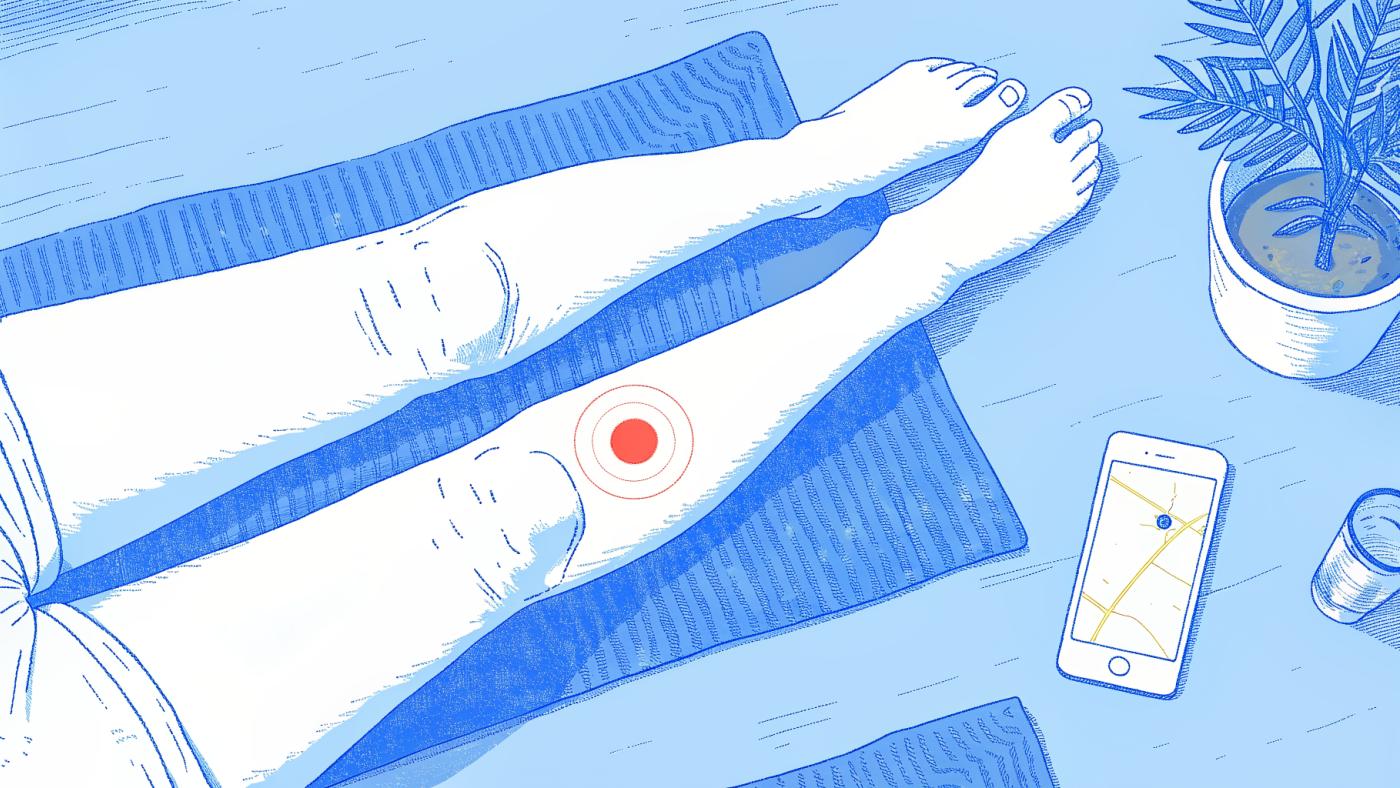
Three Questions That Separate a Normal Reaction From an Allergic One
- Location, does it stay at the injection spot or spread?
- Trajectory, is it fading over the next few days or worsening?
- Company, is it alone or accompanied by hives, rash elsewhere, or any systemic sign?
A mild injection site reaction usually stays at the injection spot, and injection site reactions are listed in the Mounjaro® and Zepbound® FDA prescribing information, so ask your prescriber what to expect and how long is too long.
- Where is it? If the redness and itch stay in a small area around the needle entry point, it is more likely local, but ask your prescriber.
- If the reaction is creeping outward or appearing on skin that never touched the pen, that is spreading, so contact your prescriber right away. Facial puffiness is an emergency sign, covered below.
- Is it getting better or worse? Note whether it is fading or growing. If it persists or worsens instead of fading, contact your healthcare provider.
One dimension that makes this triage harder than it sounds: allergic reactions can look a lot like ordinary local reactions at first, which is one more reason to check in with your prescriber.
Is anything else happening? Hives or a rash elsewhere on your body means you should contact your prescriber right away. Swelling of your face or throat, or trouble breathing, means you should get medical help right away (call 911).
Why Allergic Reactions Can Fool You
Allergic reactions to tirzepatide do not always arrive within minutes of the injection. The Zepbound® label reports both immediate hypersensitivity reactions (within one day of a dose) and non-immediate ones, which is why trajectory matters as much as location when evaluating any post-injection skin change. A reaction that looks minor on day one may still need attention later, so keep watching it and tell your prescriber how it changes.
What to Do When the Itch Spreads
Itch or a rash that spreads beyond the injection site is a warning sign, so contact your prescriber right away, and do not change anything about your GLP-1 routine without talking to them first. Bring pattern data, not just a snapshot of today's rash, so they have more to work with.
Pep AI can help with that. Its side effect log saves your symptoms by day, from a built-in list grouped by body area or your own entries, with a severity rating each day. Your dose log keeps a separate record of each shot and its injection site, so you can look back through both and compare. On the Dose tab, a Side Effects trend chart also sits next to the estimated medication-level chart, above your dose history. That gives you and your prescriber a clearer picture than memory alone.
When to Get Emergency Help
Anaphylaxis is a medical emergency. A mild-seeming itch should not be ignored if other symptoms appear, and this is not a situation to wait on a clinic callback for.
One of the hardest parts of being early on tirzepatide is knowing when a reaction crosses the line. Many beginners find it hard to separate a localized injection-site reaction, the itch, the small welt, the residual soreness, from a true systemic allergic response. That uncertainty is not carelessness; it is a real clinical ambiguity, and it creates genuine anxiety. The symptoms below are the ones that need emergency care.
Get medical help right away (call 911) if you have swelling of your face, lips, tongue or throat, trouble breathing or swallowing, fainting or feeling dizzy, a very fast heartbeat, or a severe rash or itching. A rash that spreads beyond the injection site without those signs means you should contact your prescriber right away. The signs below are explained in more detail.
1. Swelling of the Face, Lips, Tongue, or Throat - The Hallmark Danger Sign
When tirzepatide itchy skin is accompanied by swelling of the face, lips, tongue, or throat, you are no longer dealing with a minor reaction. This swelling can be a sign of a severe allergic reaction that can affect breathing. Call 911.
2. Trouble Breathing, Dizziness, or Fainting
Difficulty breathing, sudden dizziness, or fainting alongside tirzepatide itchy skin are classic anaphylaxis warning signs. These signs can get worse quickly. Do not drive yourself. Call 911.
3. Racing Heart and Trouble Swallowing
A racing heartbeat and difficulty swallowing are two additional anaphylaxis markers that, when combined with tirzepatide itchy skin and hives, can be signs of a severe allergic reaction. These signs need emergency care, not a scheduled appointment.
4. Call 911 Right Away
When any symptom on this list appears, stop the injection if it is still in progress and call 911. Do not drive yourself to the ER. Emergency responders can evaluate and treat a serious allergic reaction on the way, which is why calling for emergency help beats driving yourself. Do not wait to see whether symptoms pass.
In a frightening moment, it can be hard to remember when you took your last dose or which site you used, and an emergency team may ask. When the timing, the site and your step-up schedule live in different places or nowhere at all, that history is hard to piece together.
Pep AI's dose log records when each shot was taken, the dose and the injection site, so those details are on your phone if someone asks. Your side effect log, saved by day with a severity rating, adds the rest.
If none of those emergency signs are present, it may be a local reaction, but your prescriber or healthcare provider is the right person to assess it. Your dose timing, step-up schedule and injection sites are worth logging in one app, because they are usually tracked in separate places.
The Pattern Most People Miss When Tracking Tirzepatide Itching
Three variables are worth logging when you track a tirzepatide itch flare: which site you used, where you sit in your dose step-up schedule, and how many days post-injection the symptom appeared. Those three variables often end up in separate places, so the pattern never assembles itself.
Why Step-Up Weeks Are Worth Watching for Itching
Your body is meeting a new dose level at each step-up, and injection site reactions were reported in the SURPASS clinical trial program and in case reports, so note when they appear relative to a dose change and share that with your prescriber. If you note when your dose stepped up and compare it with your side effect log, you and your prescriber can see whether itching tends to show up around those weeks.
How Untracked Site Rotation Silently Amplifies Skin Reactions
Repeating an injection site without a log makes it harder to notice when local reactions keep showing up in the same place. Without a log, it is easy to drift back to the same spot and stack reactions on skin that is already irritated. Pep AI marks your last site on the body map, shows the last 4 weeks of sites on the Home screen (brighter means more recent), and warns you if you pick the same spot as last time, so you can bring that record to your prescriber if a spot keeps reacting. Pep AI does not choose your next site, so ask your prescriber how to rotate.
How Comparing Dose History and Symptoms Can Help You Spot a Tirzepatide Itch Pattern
When you log your doses, injection sites and symptom severity, you can look back and compare whether itching appeared a few days after a step-up shot or at a site you used before, and your prescriber can help interpret what it means. That is very different from itching that appears at a new site, mid-stable-dose week, and worsens rather than fades, which is the trajectory worth flagging to your prescriber.
Telling these patterns apart is easier when your records live in one app.
Pep AI is built for that kind of record. Its side effect log lets you pick a symptom from the built-in list, which is grouped by body area, or add your own, with a daily severity rating. Your dose history and injection-site rotation have their own logs in the same app, so you can look back through each one and compare, rather than piecing things together from memory, notes, and calendars.
Related Reading
- Ozempic® Hair Loss
- Zepbound® Hair Loss
- Lump After Injection
Next steps
If the same itchy spot keeps appearing after every shot and you have no reliable way to tell whether it is serious, the path forward starts with seeing the pattern that is already there. Post-injection itching can have several causes, and a log of dose timing, injection site, and step-up schedule can help you see whether a pattern is there to discuss with your prescriber. Once you can look back through those records, the reaction may feel less random. Start with our GLP-1 tracker app.
The three-part pattern check (location, trajectory, and company) gives you organized notes to bring to your prescriber instead of relying on memory. But that check only works when you can answer the trajectory question with actual data, not memory. Keeping dose history, injection-site rotation, and symptom severity logged in one app turns a subjective sense of random itching into a readable record you can share. Those two insights point to one obvious next step: build the log before the next reaction, not after it.
Start with the GLP-1 tracker app from Pep AI, which keeps your dose history, injection sites and symptom severity in separate logs you can look back through and compare. Log your next shot and tap the site on the body map, rate your itch in the side effect log that day, and note where you are in your step-up schedule. Pep AI can also make a PDF report of your doses, injection sites and weight to bring to your prescriber. Pep AI is free to try: a free download and a 3-day free trial on iPhone or Android, then a subscription.
Frequently Asked Questions
Can the inactive ingredients in tirzepatide cause itching even if I'm not reacting to the drug itself?
It is possible. Tirzepatide's inactive ingredients are listed in the Mounjaro® or Zepbound® FDA label, so check the label. A reaction to an inactive ingredient can look similar to a reaction to the drug itself, so it is worth asking your prescriber or pharmacist what may be causing it and what your options are.
Does the angle I hold the pen at actually affect how much my skin itches afterward?
Technique may play a part. Injection technique is best taken from the instructions for use in your medication's FDA label, and your prescriber or pharmacist can walk you through the correct angle and handling for your pen.
Why does my injection site reaction seem to be getting worse the longer I've been on tirzepatide?
Reactions can change over time, so a log of sites and severity helps you spot shifts. Rotating injection sites as directed in your medication's instructions for use, and logging each site in the app's body map, helps you see which sites have been used recently. Site rotation is one habit worth talking through with your prescriber if reactions seem to be getting worse.
How long should I wait before I'm actually worried about an injection site reaction?
How long a reaction lasts can vary from person to person, so tracking when it starts, how severe it is, and when it clears gives your prescriber useful detail. If a reaction is spreading, contact your prescriber right away. If it is lingering or worrying you, call them too, and bring your side effect log to the conversation.
Does warming up the pen before I inject actually make a difference for itching?
Not necessarily. The Mounjaro® and Zepbound® pen instructions say it is not necessary to warm the pen to room temperature. Storage and handling steps for your pen are set out in the instructions for use in your medication's FDA label, so follow those and ask your prescriber or pharmacist before changing your routine.
Track it all in one app.
Pep AI keeps your GLP-1 shots, injection sites, food, side effects and weight in one app, with reminders on shot day. Download it on iPhone or Android.


This article is general information for people taking a GLP-1 medication. It is not medical advice, it does not recommend any medication or dose, and Pep AI is not a medical device. Talk to your prescriber about your treatment and any change to it.