
Zepbound® can cause hair shedding, but it is usually a temporary shedding phase rather than lasting follicle damage. Here is what the clinical numbers actually show, and what you can do about it.
Hair shedding on Zepbound® is real, measurable, and documented at the regulatory level. Many GLP-1 users on Ozempic®, Wegovy®, Mounjaro®, or Zepbound® notice more hair in the shower drain a few months into treatment and naturally start looking for answers. The good news is that the clinical picture is more specific, and more manageable, than it first appears.
Hair loss (alopecia) was reported in a higher share of tirzepatide patients than placebo patients in the SURMOUNT clinical trial program, according to the Zepbound® FDA label. The label also notes that hair loss was associated with weight reduction. That gap is a real signal that the drug's effects on the body are connected to shedding.
4-5%
of tirzepatide patients in two SURMOUNT trials reported hair loss, depending on dose (Zepbound® label)
The 1% placebo rate is the critical anchor here. It represents the rate of hair loss reported by people in the trial who received placebo instead of tirzepatide.
The four- to fivefold higher rate in the tirzepatide groups suggests the medication is involved. But the direction of that involvement matters enormously.
Hair loss was reported more often with tirzepatide than with placebo in the trials. Your prescriber is the right person to help you work out what may be behind shedding in your case.
Tirzepatide can reduce appetite a lot, which can mean eating much less and losing weight quickly. That physical stress can send hair follicles into an early resting phase.
Your follicles may be responding to these body changes rather than to direct damage from the drug.
This distinction changes everything about how you respond. If you are worried about shedding, talk with your prescriber before making any decision about your Zepbound® treatment. Some people notice thinning with no record of when it began, leaving them guessing at the cause.
Tools like a GLP-1 tracker app can help you capture that record before your next prescriber visit. Knowing shedding is real and documented is the first step. But it still leaves the bigger question unanswered: what is actually happening inside your body that sends hair into early rest?
The next section breaks down what may be happening after Zepbound® suppresses your appetite.
Key takeaways
- Hair shedding is reported with GLP-1 medications such as Zepbound®, and the cause in any individual case is a question for your prescriber or healthcare provider.
- Shedding can show up weeks or months after a change such as a dose step-up, so noting when your dose changed and when shedding began, and sharing both with your prescriber, makes the pattern easier to see.
- Food intake, protein, hydration and overall wellness are all worth logging, so you and your prescriber can look back at them along with your shedding notes.
- Protein is one of the daily targets you can track in Pep AI. Appetite suppression can make hitting daily targets harder, which is why logging your estimated intake can be useful to review with your prescriber.
- If you notice patchy loss, shedding that keeps increasing, or changes to your scalp, bring it up with your prescriber or healthcare provider.
- Pep AI's side effect log lets you log shedding (pick it from the built-in list, which is grouped by body area, or add your own) and rate your symptoms each day, and daily check-ins cover energy, mood and sleep. Your dose log lives in the same app, so when you sit down with your prescriber, you can look back through both instead of reconstructing from memory.
Why Zepbound® Causes Hair Loss in the First Place
Reduced appetite and lower food intake on a GLP-1 may contribute to physical stress, nutritional depletion, and hormonal change, which may be factors in hair moving from the growth phase into the resting phase.

Tirzepatide Is the Trigger, Not the Cause
Tirzepatide itself is not thought to damage hair follicles directly. Instead, lower caloric intake, faster weight loss and other body changes may push hairs into a resting phase, a pattern known as telogen effluvium. Your prescriber can help you understand what is behind your own shedding.
Telogen Effluvium - How Rapid Weight Loss Hijacks the Hair Growth Cycle
Hair shedding in tirzepatide-treated patients is generally thought to be consistent with telogen effluvium, a well-characterized physiological response to rapid weight loss and caloric restriction, rather than direct follicle damage.
In telogen effluvium, a larger share of actively growing hairs can shift into the telogen phase during a significant physiological stressor.
Appetite changes can make regular eating harder, and Pep AI helps you keep track of meals and share the pattern with your prescriber. Pep AI's food logging lets you log meals with photo, menu and barcode scans, search, recents, saved foods and meals, or quick log. You can also tell Pep Bot, the in-app assistant, what you ate by typing or speaking. That helps you capture the small, unplanned meals that happen because appetite has dropped and eating feels like a chore rather than a signal.
Nutritional Gaps That Open Up When Appetite Collapses
Hair is made almost entirely of keratin, a protein, and follicles are among the fastest-dividing cells in the body, so nutrition matters for hair. Eating much less on a GLP-1 medication may make it harder to get enough protein, iron, zinc and vitamin D, which is worth raising with your healthcare provider.
Pep AI's menu scanner helps at one of the highest-risk moments: eating out or ordering in, when it is hardest to know whether a meal is delivering the protein you need or only looks like enough. Scan a menu and it suggests 3 to 5 best picks, ranked by an estimated GLP-1 score (0 to 100), with estimated calories, protein, fiber, carbs and fat for each. The score describes the food, it is an estimate, and it is not medical or dietary advice.
Hormonal Shifts and Genetic Predisposition - The Two Amplifiers
Significant weight reduction may be linked to temporary hormonal changes. Family history may also be a factor in hair changes, so talk with your healthcare provider about your own history.
Tracking your weekly weight trend with Pep AI's weight tracking, especially before provider appointments, gives your clinician a picture of your actual rate of loss over time, not a single weigh-in snapshot. If you set a goal weight, Pep AI also shows an estimated goal date, which can be a useful starting point for talking with your prescriber about pace.
When Hair Loss Starts on Zepbound® and How Long It Lasts
Hair shedding timelines vary from person to person, so the clock may not start on the day of your first injection, and your prescriber is the right person to help work out what may be contributing.

Zepbound® Hair Shedding Often Shows Up 2-4 Months After a Trigger
Shedding usually starts 2 to 4 months after the stressor because the hair follicle cycle has its own internal clock that delays the visible effect.
Zepbound® doses are stepped up on a schedule set out in the FDA label, and your prescriber decides which step is right for you. If you notice shedding months in, log it in Pep AI. Counting back 2 to 4 months from when shedding began can help you and your prescriber see what changed around that time, such as a dose step-up, a drop in eating or faster weight loss.
Why Shedding Can Last Longer for Some People
When GLP-1 medications reduce hunger, protein and other nutrients can fall short. That may add to the physical stress of rapid weight loss and, for some people, extend the shedding window.
Is Zepbound® Hair Loss Permanent?
Dermatology sources describe telogen effluvium as a temporary shedding phase in which follicles stay intact, with hair often returning to its usual fullness within about 6 to 9 months once the trigger settles. For most people with telogen effluvium, the follicles are cycling toward regrowth even while the daily shed feels alarming. Your prescriber or a dermatologist can confirm whether that is what you are seeing.
Mounjaro® vs Zepbound® - Same Molecule, Similar Shedding Pattern
Mounjaro® and Zepbound® both contain tirzepatide, so your prescriber can tell you what to expect on either. A Mounjaro® user who notices shedding a few months after a dose step-up is likely describing the same pattern as a Zepbound® user in the same situation.
How Pep AI Turns a Vague Memory Into a Record You Can Actually Use
Pep AI's side effect log lets you rate shedding and other symptoms once a day, and the dose log records when each shot was taken. On the Dose tab, a Side Effects trend chart sits next to the estimated medication-level chart, above your dose history, so you can look back at how your symptoms moved around a dose step-up. That gives you an organized record to bring to your prescriber when working out whether a new shedding episode is a second wave or something worth investigating further.
Beyond side effects, Pep AI's food logging gives you an estimated daily picture of whether you are getting enough protein, fiber, and water on the low-appetite days that matter most. The menu scanner helps with meals out or ordered in, where nutrition targets are easiest to miss.
Related Reading
- Zepbound® Injection Sites
- Mounjaro® Injection Site Reaction
- Ozempic® Bruising
What You Can Do to Reduce Hair Loss on Zepbound®
Four strategies, plus a way to track them, are worth raising with your prescriber if hair shedding worries you on Zepbound®: consistent protein intake, bloodwork, a steady pace of weight loss, and gentle scalp care. Each one maps to an upstream mechanism driving the shed. All of them demand daily follow-through at exactly the phase of treatment when appetite suppression, dose step-ups, and fatigue make follow-through hardest.
1. Make Protein a Priority at Meals
Hair is built from keratin, a protein, so follicles can be among the first tissues to feel it when intake falls short. GLP-1 medications reduce appetite, so it can be easy to fall short of protein goals without noticing. Pep AI suggests daily calorie, protein, carb, fat and fiber targets during onboarding, and you can change them any time to match what your prescriber or dietitian advises. Spreading protein across meals, rather than saving most of it for dinner, is a common approach to ask about. The real trade-off: hitting a protein target during a step-up week, when nausea can be worse and appetite drops, is genuinely hard. Protein shakes, Greek yogurt, and cottage cheese are common workarounds because they take very little appetite to get down.
2. Get Targeted Bloodwork - Ferritin, Vitamin D, Zinc, and Thyroid
Ferritin, vitamin D, zinc and thyroid levels are tests to ask your prescriber about if shedding concerns you. Ferritin is worth naming, since not every basic blood test includes it. Check with your prescriber before taking any supplements.
3. Talk With Your Prescriber About a Steady Pace of Weight Loss
Rapid weight loss is often discussed as a possible contributor to hair shedding, so the pace of weight loss matters. There is no one pace that fits everyone, so ask your prescriber what pace is right for you, including any questions about your step-ups. That trade-off belongs in a conversation with your prescriber, not a decision made between appointments.
4. Switch to Gentle Hair Care - No Tight Styles, Heat, or Harsh Chemicals
While follicles are in a stressed resting phase, mechanical and chemical damage compounds the shed. Tight hairstyles that pull at the root, frequent heat styling, and harsh chemical treatments all add avoidable loss on top of the physiological shed already underway. This strategy does not stop telogen effluvium at the source, but it can help prevent the extra breakage that makes the overall shed look and feel worse than it actually is. Think of it as protecting the follicles still in the growth phase while the resting ones cycle out.
5. Use Pep AI to Look Back at Dose Step-Ups and Shedding, and Reduce Tracking Burden
The hardest part of all four strategies is staying consistent when the connection between a dose step-up, a protein dip, and a shedding spike three months later is scattered across notes and apps. Pep AI keeps your dose log, food log and symptom log in one app, so you can look back through them and compare what changed around a step-up. That makes the protein and pace-of-loss habits feel concrete and worth keeping rather than abstract. One-tap dose logging from the Lock Screen Live Activity, the large Next Dose widget (iOS 17+) and the Apple Watch app is also available, on iPhone only. This is most useful when shedding has already started and you want to show your prescriber what shifted in the weeks before it did. Pep AI is free to try: a free download and a 3-day free trial on iPhone or Android, then a subscription.
These strategies are worth talking through with your prescriber, and there are specific signals that mean shedding needs a closer look soon. The next section maps what those red flags look like and what to bring to that appointment.
When Zepbound® Hair Loss Warrants a Prescriber Visit
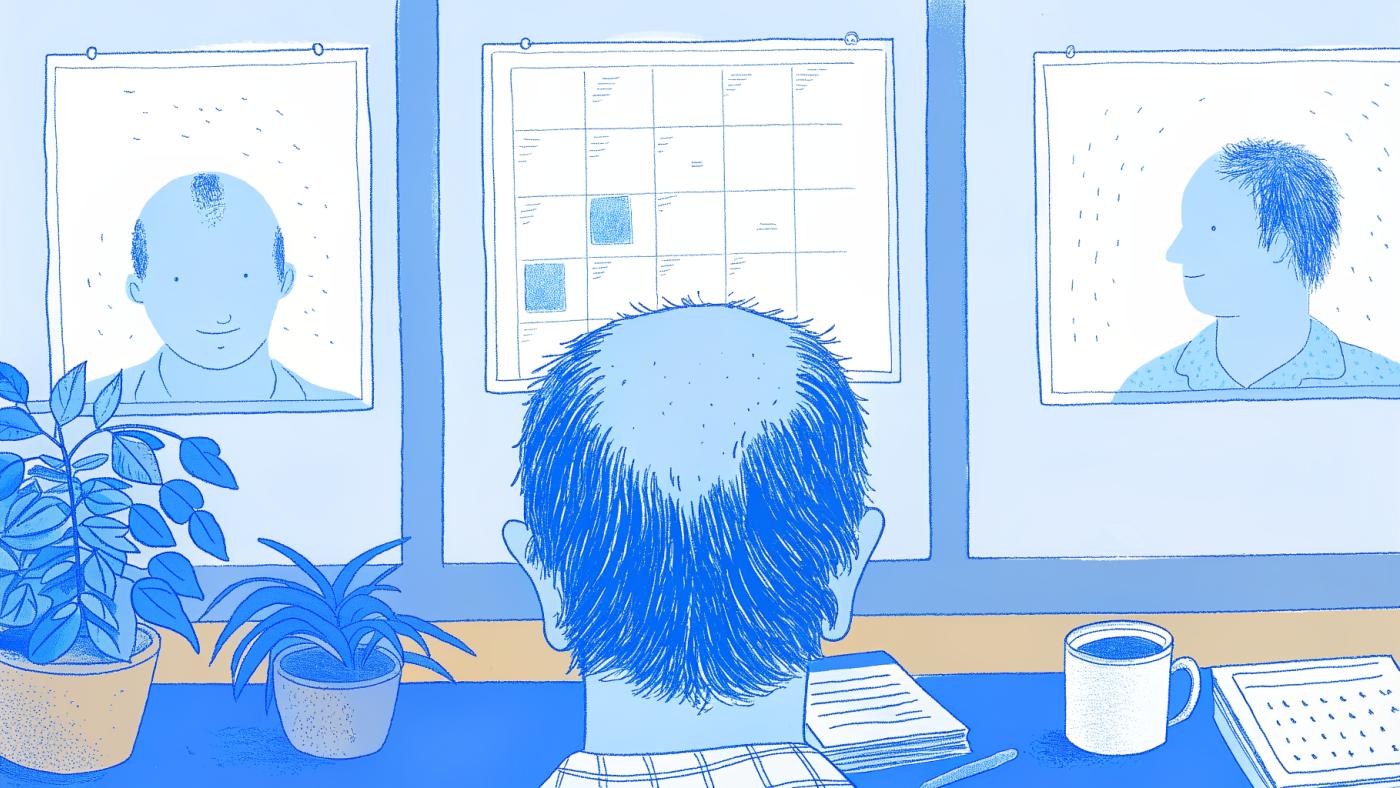
Three Red Flags That Put Zepbound® Shedding Outside the Normal Window
Patterned or localized loss is the first flag to watch for. If you are finding a distinct bald spot, a receding hairline in one area, or loss concentrated in a specific zone rather than spread evenly, raise it with your prescriber or a dermatologist. DS Laboratories notes that other forms of hair loss can be mistaken for telogen effluvium, so this pattern warrants evaluation rather than watchful waiting.
Scalp symptoms alongside the shedding are the second flag. Burning, itching, flaking, or tenderness accompanying the hair loss are signs that something more than routine shedding may be occurring. According to the same DS Laboratories guidance, diagnosis usually involves a medical history and a scalp exam, so mention these symptoms to your prescriber or a dermatologist.
Shedding that runs well past six months is the third. DS Laboratories' summary describes most cases of telogen effluvium as lasting less than six months, so loss that keeps going beyond that point may mean a trigger is still active, such as low protein or micronutrient intake on a suppressed appetite. Your prescriber can help work out what is behind it.
A record of what you ate and when shedding changed matters, because a prescriber trying to separate normal telogen effluvium on a GLP-1 from ongoing nutritional stress needs data to work from.
Pep AI's food logging records your meals with estimated protein and fiber leading the day, so the record exists when you need it. That logged nutrition history, together with your dose log and any shedding you have rated in the side effect log, gives your prescriber or dermatologist something concrete: a week-by-week record they can compare with your blood panel results. For appointments, Pep AI can also create a PDF report of your doses, injection sites and weight.
Shedding That Restarts or Intensifies After a Period of Stabilization
Shedding that stops and then returns, or gets worse, is worth raising with your prescriber, who can help work out what is going on. DS Laboratories notes that some cases of telogen effluvium are chronic and may not resolve on their own, and that an ongoing cause, such as continued stress or a poor diet, needs to be addressed. In either case, a detailed record of when shedding paused and when it returned is the most useful thing you can bring to that conversation.
Related Reading
- Lump After Injection
- Ozempic® Hair Loss
Next steps
If clumps of hair in the shower are sending you into a spiral of worry weeks after a Zepbound® dose step-up, the path forward starts with recognizing that the shape and sensation of your shedding, not just its volume, tells you which response is appropriate. It is worth logging the pattern of your shedding and noting when your dose stepped up. Patchy spots, a receding hairline, or any shedding paired with scalp redness or pain may point to a different condition and needs prompt evaluation by your prescriber or a dermatologist. Start with our GLP-1 tracker app.
Dose step-up dates are worth noting along with when your shedding began, so your prescriber can look at the timing with you. But low-appetite days can also mean your protein, iron, vitamin D, and zinc intake is lower than usual, so logging your estimated nutrition adds useful context. Those two realities together point to one practical action: building a logged record of your dose history, nutrition, and shedding severity in one app before your next appointment.
Start by tracking your shots, symptoms, and daily nutrition in one place. Once your doses and shedding entries are logged in the same app, you can look back through them and compare, so the pattern is easier to show your prescriber than a rough recollection.
Frequently Asked Questions
Is hair loss from Zepbound® permanent?
Telogen effluvium is usually temporary, and hair often regrows once the trigger settles, but whether that applies to you is a question for your prescriber. Users with pre-existing androgenetic alopecia may see a slower or less complete recovery.
Should I stop taking Zepbound® to prevent further hair loss?
Whether to stop or change Zepbound® is a medical decision, so talk with your prescriber before making any change. In the meantime, you can log your estimated protein intake and what you actually eat on low-appetite days, then share that record with your prescriber.
What is telogen effluvium, and why does rapid weight loss trigger it?
Telogen effluvium is a shedding pattern in which a physiological stressor pushes hairs prematurely into the resting (telogen) phase, after which they shed. Rapid weight loss is one of several possible stressors, and shedding volume can feel alarming, so it helps to log when it started and how severe it is, and to bring that record to your prescriber.
What nutritional deficiencies from Zepbound®'s appetite suppression contribute to hair shedding?
Hair growth depends on adequate nutrition, including protein, iron, zinc, and vitamin D, so ask your prescriber or another healthcare provider whether your intake is enough. If appetite drops and total intake falls sharply for any reason, those nutrients can fall below what healthy hair growth needs, and that gap may be one factor in shedding.
Who is most at risk of worse hair shedding on Zepbound®?
Your prescriber can tell you whether your pace of weight loss or other personal factors could affect shedding, and a logged weight trend helps that conversation. Risk factors for hair shedding can differ from person to person, such as a family history of hair loss or the pace of weight change. The Zepbound® label also notes that in two trials, hair loss was reported more often in women (7.1%) than in men (0.5%) taking Zepbound®.
Track it all in one app.
Pep AI keeps your GLP-1 shots, injection sites, food, side effects and weight in one app, with reminders on shot day. Download it on iPhone or Android.


This article is general information for people taking a GLP-1 medication. It is not medical advice, it does not recommend any medication or dose, and Pep AI is not a medical device. Talk to your prescriber about your treatment and any change to it.